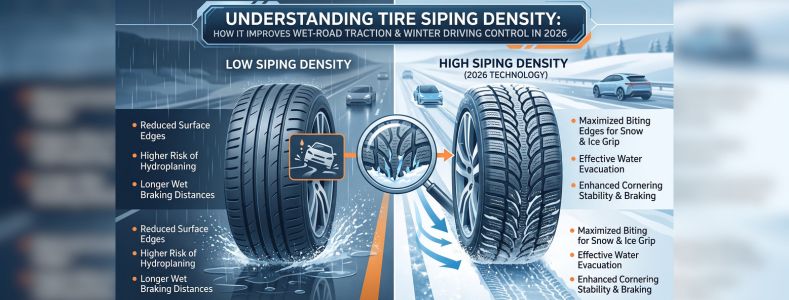
Tire design plays an important role in maintaining vehicle control across changing road conditions. One often-overlooked feature is siping density, which refers to the number and arrangement of small cuts molded into a tire’s tread blocks. Properly designed sipes can create additional biting edges and help manage water, slush, and light snow. For drivers comparing all season tires or searching for the best winter tires, understanding siping density can make it easier to evaluate traction, braking performance, and winter driving control in 2026.
What Is Tire Siping?
Sipes are narrow grooves or slits built into tire tread blocks. Unlike the larger grooves responsible for channeling substantial amounts of water, sipes create smaller contact edges within individual tread blocks.
When a tire contacts the road, these small edges can flex and interact with the road surface. This can improve traction in certain conditions, particularly on wet, cold, snowy, or slippery surfaces. However, siping is not simply a matter of adding as many cuts as possible. The design, depth, shape, spacing, and density of sipes all influence tire performance.
How Siping Density Affects Wet-Road Traction
Water between a tire and road surface can reduce available grip. Tread grooves help move larger quantities of water away from the contact area, while sipes can contribute to managing thin water films.
A properly designed siping pattern creates additional tread edges that can interact with the road. This may improve traction during acceleration, cornering, and braking on wet surfaces. For everyday drivers, this can provide more predictable handling when roads become slippery after rainfall.
Why Sipes Matter in Winter Conditions
Cold temperatures can make road surfaces harder and less forgiving. Snow and slush can further reduce tire-road interaction. Sipes are particularly useful in winter-oriented tread designs because they provide additional biting edges. As the tire rolls across packed snow, these edges can help the tread engage with the surface.
This is one reason winter-focused tires typically feature extensive siping compared with many conventional performance tires.
Siping Density and Snow Traction
Snow traction depends on several factors, including tread compound, tread pattern, temperature, vehicle weight, and road conditions.
Higher siping density can increase the number of small edges available to interact with snow. Some sipes are also designed to open slightly as the tread block contacts the road, creating additional edges.
This can contribute to improved grip during starts, stops, and turns on snowy roads.
Drivers looking for the best winter tires should therefore consider siping as one part of the overall tread design rather than evaluating it independently.
Finding the Right Balance Between Sipes and Tread Stability
More sipes do not automatically mean better performance. If tread blocks contain excessive cuts without sufficient structural support, they can become more flexible than intended. Excessive movement may affect steering response and tread stability.
Modern tire engineering therefore focuses on balancing siping density with block rigidity. The objective is to provide useful biting edges without compromising handling precision. This balance becomes especially important for drivers who regularly move between dry highways, wet roads, and winter conditions.
All-Season Tires and Siping Design
All season tires are designed to provide balanced performance across a wider range of conditions. Their tread designs generally need to work in warm temperatures, rainfall, cooler weather, and occasional light snow.
Because of this broad operating range, their siping patterns are usually engineered as part of a compromise between wet traction, dry-road stability, comfort, and mild winter capability. Drivers in regions with occasional snowfall may benefit from this balanced approach, while areas with frequent severe winter conditions may require dedicated winter tires.
Siping and Braking Control
Braking performance depends heavily on the tire’s ability to maintain contact with the road. On wet or cold surfaces, properly engineered sipes can contribute additional tread edges that support road interaction. This can help the tire maintain grip when braking forces are applied.
Still, stopping distance depends on many factors, including vehicle speed, road temperature, tire compound, tread depth, tire pressure, and road surface. Siping should therefore be viewed as one component of an integrated tire design.
How Siping Works With Tire Compounds
Tread compound and siping work together. Winter tires typically use compounds formulated to remain more flexible at low temperatures. When combined with dense and strategically positioned sipes, this flexibility allows the tread to maintain useful contact with cold or snowy surfaces.
By contrast, tires designed primarily for warm-weather driving may use compounds and tread structures optimized for dry-road stability and high-temperature performance. The interaction between compound and tread design is therefore essential when selecting tires.
Siping Density and Tire Wear
Siping patterns can also influence how tread blocks move during driving. Uneven or excessive movement may contribute to irregular wear under certain conditions. Modern tire manufacturers use computer modeling, tread testing, and material engineering to optimize siping patterns for performance and durability. Drivers should also maintain correct tire pressure and perform regular tire inspections to support even tread wear.
Why Tire Design Matters More in 2026
Modern vehicles increasingly include advanced traction control, stability systems, and driver-assistance technologies. However, these systems still depend on the tires maintaining physical contact with the road.
Tire technology continues to focus on optimizing the relationship between tread geometry, compounds, siping, and road conditions. For consumers, this means tire selection should involve more than looking at price or tread appearance. Understanding features such as siping density can provide useful insight into how a tire is engineered for specific driving environments.
Choosing Tires for Your Driving Conditions
The right tire depends on where and how a vehicle is driven. Consider:
- Typical winter temperatures
- Frequency of snowfall
- Wet-road conditions
- Highway versus city driving
- Dry-road performance requirements
- Expected mileage
- Local seasonal conditions
Drivers experiencing occasional light snow may find all season tires suitable for their needs. Those regularly driving through snow and freezing temperatures should consider dedicated winter designs when evaluating the best winter tires for their vehicle.
Final Thoughts
Tire siping density plays an important role in how tread blocks interact with wet, cold, snowy, and slippery road surfaces. Properly engineered sipes can provide additional biting edges, support traction, and contribute to more controlled braking and handling.
However, siping is only one part of tire performance. Tread compound, groove design, block rigidity, tire pressure, tread depth, and road conditions all influence the final result. Understanding these factors can help drivers make more informed decisions when comparing all season tires and evaluating the best winter tires for different driving environments in 2026.
FAQs
What is tire siping?
Tire siping refers to the small cuts or slits molded into tread blocks. They create additional edges that can interact with wet, cold, snowy, and slippery road surfaces.
Does more siping always provide better traction?
No. Excessive siping can affect tread-block stability. Tire manufacturers balance siping density with block rigidity and other tread characteristics.
Are sipes important for winter tires?
Yes. Sipes are an important part of many winter tread designs because they provide additional biting edges that can support traction on snow and cold surfaces.
Are all season tires good for winter driving?
All season tires can provide reasonable performance in mild winter conditions, but dedicated winter tires are generally designed specifically for colder temperatures and more severe snow and ice conditions.
What should I consider when choosing winter tires?
Look at tread design, siping, winter-rated compounds, snow performance, braking characteristics, tire size, local climate, and your typical driving conditions when comparing the best winter tires.