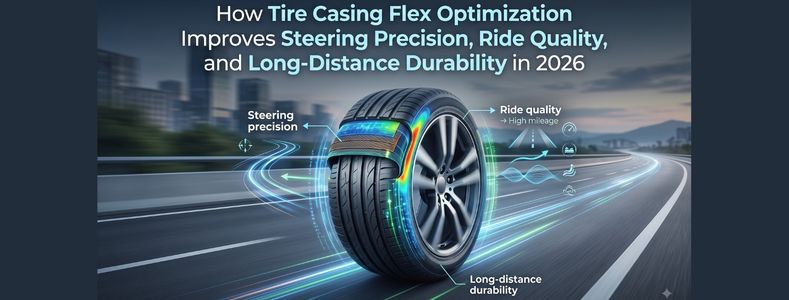
A modern tire has to do much more than simply support the weight of a vehicle. It must respond to steering inputs, absorb road imperfections, maintain contact with the pavement, and withstand thousands of miles of heat, friction, and changing road conditions.
One of the important areas receiving greater attention from tire engineers in 2026 is casing flex optimization. The tire casing is the structural foundation that supports the tread and influences how the tire deforms as it rolls. Carefully controlling this flex can help manufacturers balance steering precision, ride comfort, road stability, and long-term durability.
For drivers looking for the best tires for car, understanding casing construction can provide useful insight beyond tread pattern and appearance. Similarly, modern all season tires rely on carefully engineered casing characteristics to provide balanced performance across different everyday driving conditions.
What Is Tire Casing Flex?
Tire casing flex describes how the structural body of a tire bends and deforms while the vehicle is moving. Every tire flexes to some degree. As it rotates, the portion contacting the road changes shape and then returns to its original form.
This movement occurs continuously during:
- Acceleration
- Braking
- Cornering
- Highway driving
- Rough-road travel
Engineers aim to control this flex rather than eliminate it completely.
Why Casing Flex Matters
The amount and distribution of casing flex can influence several aspects of driving. These include:
- Steering response
- Ride comfort
- Cornering stability
- Heat generation
- Tread wear
- Rolling resistance
- Overall durability
A casing that is excessively flexible may provide a comfortable ride but feel less responsive during aggressive steering. A very stiff construction can improve certain handling characteristics but may transmit more road harshness into the cabin.
Modern tire design therefore focuses on finding an appropriate balance.
How Casing Design Affects Steering Precision
Steering precision depends partly on how quickly a tire responds when the driver turns the steering wheel. During cornering, lateral forces cause the tire’s sidewall and casing to deform.
Controlled casing flex can help the tread remain more consistently aligned with the direction of travel.
This can contribute to:
- More predictable steering
- Better lane-change response
- Improved cornering confidence
- Reduced steering delay
The result is particularly noticeable during highway driving and quick directional changes.
Balancing Comfort and Stability
Ride quality and handling often require different tire characteristics. A tire needs enough flexibility to absorb small road imperfections, but excessive movement can reduce steering precision.
Optimized casing construction attempts to balance these requirements. Manufacturers can adjust factors such as:
- Casing materials
- Reinforcement layers
- Sidewall construction
- Belt configuration
- Internal stiffness
These elements work together to influence how the tire responds to different road conditions.
Casing Flex and Long-Distance Driving
Long-distance driving places continuous stress on tires. During extended highway travel, a tire repeatedly flexes as it rotates. This creates mechanical movement and heat.
If heat is not managed effectively, it can contribute to accelerated material aging. Optimized casing construction can help control deformation and heat generation, supporting consistent performance over extended journeys.
Drivers who regularly travel long distances should therefore pay attention to tire specifications, load ratings, inflation, and overall condition.
The Relationship Between Casing Flex and Heat
Every tire generates some heat while operating. Heat can result from:
- Casing deformation
- Tread flex
- Friction
- Road contact
- Ambient temperatures
- Vehicle load
Excessive flex can increase energy loss and heat generation. Tire manufacturers use advanced materials and structural designs to manage this behavior.
Maintaining the correct tire pressure is also essential because underinflation can increase sidewall flex and operating temperatures.
Importance of Proper Tire Pressure
Even the most advanced casing design cannot compensate for incorrect inflation. Underinflated tires can experience:
- Greater sidewall flex
- Increased heat generation
- Higher rolling resistance
- Uneven tread wear
- Reduced handling response
Overinflation can also change the intended contact-patch characteristics. Drivers should follow the vehicle manufacturer’s recommended cold tire pressure.
All Season Tires and Casing Technology
Modern all season tires are designed to provide a practical balance between dry-road handling, wet traction, comfort, and moderate cold-weather performance. Their casing construction plays an important role in achieving this balance.
Manufacturers may tune casing stiffness and flexibility to complement:
- Tread compound
- Groove design
- Siping
- Belt construction
- Sidewall characteristics
This allows the tire to remain adaptable across different everyday conditions. However, all season tires are not designed to replace dedicated winter tires in severe snow and ice conditions.
Choosing the Best Tires for Car
Drivers searching for the best tires for car should consider more than tread design. Important factors include:
- Correct tire size
- Load index
- Speed rating
- Vehicle type
- Driving conditions
- Climate
- Expected mileage
- Manufacturer recommendations
A tire with advanced casing technology may still be unsuitable if it does not match the vehicle’s required specifications.
Casing Flex and Tread Wear
Tire deformation can influence how the tread interacts with the road.
Uneven or excessive flex may contribute to irregular tread behavior, particularly when combined with:
- Incorrect inflation
- Poor wheel alignment
- Worn suspension components
- Excessive vehicle loading
Regular inspections can help identify problems before they become significant.
Benefits for Modern Vehicles
Today’s vehicles are becoming heavier and more powerful. Electric vehicles, for example, can carry substantial battery weight and deliver strong acceleration torque.
This increases demands on tire structures. Optimized casing construction can help tires manage:
- Higher vehicle loads
- Increased torque
- Frequent acceleration
- Regenerative braking
- Long-distance driving
Manufacturers are therefore developing tire structures specifically suited to modern vehicle requirements.
Future Tire Casing Technology
Tire engineering is increasingly focused on precision and adaptability. Future developments may include:
- Advanced lightweight reinforcement
- Smart tire sensors
- Real-time temperature monitoring
- Digital casing analysis
- AI-assisted structural optimization
- Specialized EV casing designs
These developments could help manufacturers fine-tune tire performance for specific vehicles and driving conditions.
Final Thoughts
Tire casing flex optimization is becoming increasingly important in 2026 because modern vehicles demand a careful balance between handling, comfort, efficiency, and durability. By controlling how the tire casing deforms during driving, manufacturers can influence steering response, ride quality, heat management, and long-distance performance.
For drivers searching for the best tires for car, casing construction is one of several factors worth considering alongside tire size, load rating, speed rating, tread design, and driving conditions. Modern all season tires can also benefit from optimized casing designs that help balance everyday comfort and road performance.
Ultimately, tire technology works best when combined with proper inflation, wheel alignment, healthy suspension components, and regular inspections. Choosing the right tire for the vehicle and maintaining it correctly can help drivers enjoy more predictable steering, comfortable journeys, and dependable tire performance throughout its service life.
Frequently Asked Questions
What is tire casing flex?
Tire casing flex refers to the controlled deformation of the tire’s structural body as it rotates and responds to road forces.
Does casing flex affect steering?
Yes. The way a tire’s casing flexes can influence steering response, cornering stability, and how quickly the tire responds to driver inputs.
Can casing design improve ride comfort?
Yes. Carefully controlled casing flexibility can help absorb certain road imperfections while maintaining adequate structural support.
Are all season tires affected by casing design?
Yes. Modern all season tires use casing construction alongside tread compounds and patterns to balance comfort, handling, and traction across a range of conditions.
What should I consider when choosing the best tires for car?
When choosing the best tires for car, consider the correct size, load index, speed rating, vehicle requirements, climate, road conditions, driving style, and expected mileage.
Does tire pressure affect casing flex?
Yes. Underinflation can increase casing and sidewall flex, potentially increasing heat generation, rolling resistance, and uneven wear.