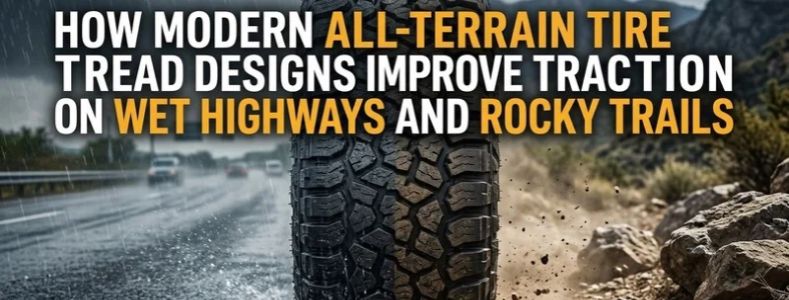
Driving conditions can change quickly when a highway becomes wet or a smooth road turns into a rocky trail. Tires must respond to these differences while maintaining grip, stability, and control. Modern tire engineering focuses on creating tread patterns that handle multiple surfaces without sacrificing everyday driving comfort.
All terrain tires have become a popular choice for truck and SUV owners who regularly travel on highways, gravel roads, and uneven trails. Their tread designs combine several features that help improve traction across different driving environments.
Understanding Modern All-Terrain Tire Tread Design
A tire’s tread is the part that directly contacts the road. Its pattern influences how effectively the tire grips the surface, manages water, and responds to steering and braking. Modern all-terrain tread designs use carefully arranged tread blocks, grooves, and small cuts called sipes. Each feature serves a specific purpose. Together, they help the tire maintain contact with the road while adapting to changing terrain.
Unlike highway tires, which focus mainly on smooth pavement, all-terrain designs provide additional grip on loose and uneven surfaces. At the same time, manufacturers refine their patterns to reduce excessive road noise and maintain comfortable highway handling.
How Tread Patterns Improve Traction on Wet Highways
Wet roads create a challenge because water can form a thin layer between the tire and the pavement. When the tread cannot move water away efficiently, the tire may lose contact with the road surface. Modern all-terrain tread designs address this issue through several important features.
1. Deep Grooves Help Channel Water
Wide circumferential and lateral grooves create pathways for water to move away from the tire’s contact area. This allows more rubber to remain in contact with the pavement during rainy conditions.
The arrangement of these grooves also affects how quickly water moves through the tread. Properly designed channels support wet-road stability and help reduce the risk of hydroplaning. However, tread depth, vehicle speed, tire pressure, and the amount of standing water also influence wet traction.
2. Sipes Create Additional Grip
Sipes are narrow cuts placed within tread blocks. They create additional biting edges that help the tire interact with wet pavement. As the tread contacts the road, these small openings can flex and assist with water movement across the contact surface. Their design also allows tread blocks to adapt slightly to uneven surfaces.
Modern tires often use carefully positioned or interlocking sipes to balance grip with tread stability. This helps prevent excessive block movement while supporting dependable handling.
3. Advanced Rubber Compounds Support Wet Performance
Tread design works together with the rubber compound. Modern tire compounds are developed to maintain flexibility and provide friction across different temperatures and road conditions.
A suitable compound helps the tread conform to small surface irregularities, improving the tire’s ability to maintain grip. For drivers who frequently travel in rain, selecting a tire with a well-developed wet-weather design can make a meaningful difference in everyday driving confidence.
How All-Terrain Treads Grip Rocky Trails
Rocky trails require a different approach to traction. Instead of managing water alone, tires must grip irregular surfaces, resist damage, and maintain control when the vehicle moves over stones or uneven ground.
1. Larger Tread Blocks Provide Mechanical Grip
Modern all-terrain tires feature strong tread blocks with varied shapes and angles. These blocks help the tire engage with gravel, stones, and rough trail surfaces. When a tire rolls over a rock, its tread blocks can contact different points on the surface. This interaction creates mechanical grip and helps the vehicle move forward with greater control.
The spacing between blocks also matters. Open areas allow loose dirt and small stones to move through the tread instead of remaining trapped against the rubber.
2. Reinforced Shoulder Blocks Improve Edge Traction
The outer edges of the tread play an important role during cornering and off-road driving. Many modern all-terrain designs include strong shoulder blocks with angled edges. These features provide additional contact points when the tire moves across loose gravel, ruts, or rocky inclines.
Shoulder traction becomes especially useful when the vehicle needs to maintain direction on uneven trails.
3. Self-Cleaning Tread Patterns Maintain Grip
Dirt, mud, and small stones can collect inside tread grooves during off-road driving. Excessive buildup may reduce the tire’s ability to grip the surface. Modern tread patterns use open channels and strategically shaped blocks to help release debris as the tire rotates.
This self-cleaning action allows the tread to expose fresh gripping surfaces more consistently, particularly on loose terrain.
Balancing Highway Comfort and Off-Road Capability
A good all-terrain tire must perform beyond the trail. Many truck and SUV owners use their vehicles for daily commuting, long highway journeys, and occasional outdoor trips.
Manufacturers address this requirement through balanced tread layouts and optimized block arrangements. Some designs use variable block spacing to reduce repetitive road noise, while stable centre tread sections help support predictable highway handling.
This balance makes modern all-terrain tires suitable for drivers who need versatility rather than a tire designed exclusively for one surface.
Choosing the Right All-Terrain Tire for Your Vehicle
Before selecting a tire, consider your regular driving conditions. Drivers who spend most of their time on paved roads may prefer a quieter tread pattern with strong wet-weather performance. Those who frequently explore rocky trails should also consider tread durability, sidewall protection, and the tire’s ability to handle uneven surfaces.
Always check the recommended tire size, load rating, and pressure requirements for your vehicle. Proper maintenance, adequate tread depth, and regular inspections remain essential for safe performance.
Conclusion
Modern all-terrain tire tread designs combine water-management grooves, flexible sipes, durable tread blocks, and carefully developed rubber compounds to improve traction on different surfaces.
These engineering features help drivers maintain better control on wet highways while supporting grip on rocky trails. For truck and SUV owners who need dependable performance across changing road conditions, choosing the right all-terrain tread design can contribute to a more confident and comfortable driving experience.
Explore suitable tire options at Gearshift Tires to find a tread design that matches your vehicle and driving needs.