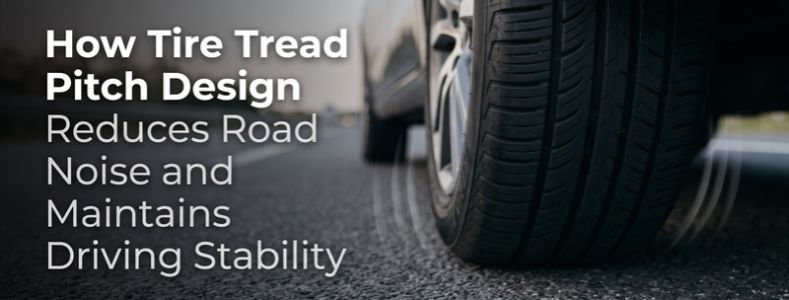
Tire performance depends on more than rubber compounds, tread depth, and sidewall construction. The arrangement and size of individual tread blocks also influence how a tire interacts with the road. One important design feature is tread pitch sequencing, which helps manage the noise generated when tread blocks repeatedly contact the road surface. By varying tread block sizes and spacing, tire manufacturers can reduce repetitive sound patterns while maintaining the traction and stability needed for everyday driving.
For drivers comparing all terrain tires and all season tires, understanding tread pitch design can help explain why different tire patterns produce different noise levels and handling characteristics.
What Is Tire Tread Pitch Design?
Tread pitch refers to the distance between repeating tread features around the tire’s circumference. These features include tread blocks, grooves, and other contact elements that interact with the road during rotation.
When a tire rolls, individual tread blocks enter and leave the contact patch. Each interaction creates small vibrations and pressure changes that can generate audible sound.
If tread blocks follow an identical repeating pattern, they may produce noise at similar intervals. Tire manufacturers use variable pitch sequencing to distribute these interactions more evenly across different frequencies.
This approach helps reduce noticeable tonal noise inside the vehicle without removing the tread features needed for traction.
How Variable Pitch Sequencing Reduces Road Noise
Variable pitch sequencing uses tread blocks of different sizes arranged in a carefully planned order. Instead of repeating one identical block pattern continuously, manufacturers combine multiple pitch lengths.
This can help prevent sound energy from concentrating at a single frequency. Important design elements include:
- Different block lengths: Varying tread block dimensions changes the timing of road contact.
- Irregular pitch arrangements: A planned sequence distributes repeated contact events across a broader range of frequencies.
- Groove placement: Circumferential and lateral grooves influence how air moves through the tread.
- Tread block geometry: Block edges and shapes affect vibration and sound generation.
These features work together to influence tire noise. However, actual cabin noise also depends on road texture, vehicle suspension, tire pressure, speed, and cabin insulation.
How Tread Pitch Design Supports Driving Stability
Reducing road noise is only one part of tire engineering. Tread blocks must also provide sufficient contact with the road during acceleration, braking, and cornering.
Tread pitch design influences how forces are distributed across the contact patch. Properly engineered block arrangements can help maintain predictable road contact while managing the vibrations associated with tire rotation.
Driving stability is also affected by tread block stiffness, shoulder construction, rubber formulation, and overall tire structure.
For example, a tire designed for highway comfort may use a different tread arrangement from one intended for loose gravel or uneven terrain. Manufacturers must balance these requirements according to the tire’s intended use.
Tread Pitch Design in All Terrain Tires
All terrain tires are designed for drivers who regularly travel across a combination of paved roads, gravel, dirt, and other challenging surfaces. Their tread patterns commonly feature larger blocks, deeper grooves, and more pronounced shoulder elements than many standard road-focused tires.
These aggressive features can improve traction on loose surfaces but may also generate additional road noise on highways.
Variable pitch sequencing can help manage the repetitive sound created by larger tread blocks. Some designs also use strategically arranged grooves and block shapes to reduce unwanted vibration.
When evaluating all terrain tires, drivers should consider:
- Tread block arrangement and spacing
- Highway noise characteristics
- Shoulder block design
- Traction requirements on loose surfaces
- Manufacturer-provided road performance information
Not every all terrain tire prioritizes quiet highway operation equally. Drivers who spend significant time on paved roads should compare noise and comfort characteristics before purchasing.
How All Season Tires Balance Comfort and Traction
All season tires are generally developed for everyday driving across a range of moderate weather conditions. Their tread patterns typically combine circumferential grooves, lateral channels, and carefully arranged tread blocks.
Compared with aggressive off-road patterns, many all-season designs prioritize consistent road contact, predictable handling, and comfortable highway operation.
Variable pitch arrangements can help reduce repetitive tread noise while maintaining the groove and block geometry required for wet-road traction.
Other important design considerations include:
- Continuous center ribs: Some tires use central tread elements to support directional stability and steering response.
- Optimized shoulder blocks: Shoulder geometry contributes to cornering behavior and contact stability.
- Water evacuation channels: Circumferential and lateral grooves help move water away from the contact area in wet conditions.
- Balanced tread stiffness: Appropriate block stiffness supports predictable handling and braking performance.
All-season tires are not suitable substitutes for dedicated winter tires in every severe snow or ice condition. Drivers should select tires according to local climate and manufacturer recommendations.
Comparing All Terrain and All Season Tread Designs
Although both categories may use variable pitch sequencing, their design priorities differ. All terrain tires generally emphasize traction across mixed surfaces, with larger blocks and more open tread patterns. All season tires typically focus on balanced road performance, including wet traction, comfort, and everyday handling.
The best choice depends on driving conditions rather than noise reduction alone. A quieter tire is not automatically the safest or most suitable option for every vehicle.
What Drivers Should Check Before Buying Tires
Before selecting a tire, review its intended application, size, load index, speed rating, and vehicle compatibility. Drivers should also consider manufacturer noise information, tread pattern photographs, wet-weather performance, and independent testing where available.
Correct inflation pressure and regular wheel alignment are equally important. Even a well-designed tread pattern may produce excessive noise or uneven handling if the tire is underinflated, incorrectly fitted, or worn irregularly.
Final Thoughts
Tire tread pitch design plays an important role in managing road noise while supporting consistent contact with the road. Variable pitch sequencing helps distribute tread contact events across different frequencies, reducing repetitive noise patterns.
For drivers comparing all terrain tires with all season tires, understanding these design differences makes it easier to select products suited to their driving environment. The ideal tire balances noise comfort, traction, stability, and durability according to the vehicle and road conditions.
Frequently Asked Questions
What does tire tread pitch mean?
Tread pitch describes the spacing and repeating arrangement of tread blocks around a tire’s circumference.
How does variable pitch reduce tire noise?
It changes the timing of tread block contact with the road, helping distribute sound energy across different frequencies rather than concentrating it at one frequency.
Are all terrain tires louder than all season tires?
Many aggressive all terrain tires produce more highway noise because of their larger, more open tread patterns. However, noise levels vary by tire model and design.
Do all season tires use variable pitch technology?
Many modern tire designs use variable pitch arrangements to help manage road noise, although specific technologies differ between manufacturers.
Does tread pitch design improve wet-road stability?
Tread pitch alone does not guarantee wet-road stability. Overall performance also depends on rubber compounds, tread grooves, block stiffness, inflation pressure, and tire construction.