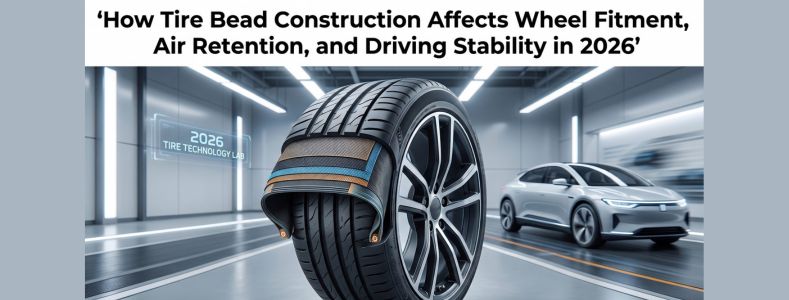
Tire performance depends on much more than tread design and rubber compound. The bead area, which connects the tire to the wheel, plays an important role in maintaining proper fitment, air retention, and overall driving stability. Drivers researching the best 245/75R16 tires or comparing options such as Cooper tires should understand how bead construction influences the relationship between the tire and wheel. In 2026, advances in tire manufacturing and increased attention to fitment accuracy are making bead design an important consideration for drivers seeking dependable performance across highway, utility, and light off-road applications.
What Is a Tire Bead?
The tire bead is the reinforced portion of the tire that sits against the wheel rim. It creates the mechanical connection between the tire and wheel and helps maintain the tire’s position during normal driving.
A tire bead typically includes:
- High-strength steel wires
- Rubber compounds
- Reinforcing materials
- Protective layers
- Precisely formed bead geometry
The bead must be manufactured accurately because it has to match the intended wheel dimensions.
Why Bead Construction Matters
The bead performs several important functions simultaneously. It helps:
- Secure the tire to the wheel
- Maintain an effective air seal
- Resist movement during acceleration and braking
- Support cornering forces
- Maintain consistent tire positioning
If the bead and wheel are correctly matched, the tire can maintain a stable connection under normal operating conditions.
How Bead Design Affects Wheel Fitment
Correct tire and wheel compatibility is essential for safe operation. A tire’s bead seat must correspond correctly with the wheel’s design and dimensions. Installing an incompatible tire on a wheel can create serious fitment and performance problems.
When selecting the best 245/75R16 tires, drivers should confirm that their vehicle uses compatible 16-inch wheels and that the tire’s specifications match the vehicle manufacturer’s requirements. Tire size alone does not determine complete compatibility. Wheel width, load requirements, vehicle application, and manufacturer specifications also need to be considered.
The Role of Bead Reinforcement
Bead reinforcement helps the tire maintain its shape around the wheel. During driving, the tire experiences forces from:
- Acceleration
- Braking
- Cornering
- Road impacts
- Uneven surfaces
- Vehicle load
Reinforcement helps the bead resist deformation under these conditions. The exact construction varies between tire models and applications.
How Bead Construction Supports Air Retention
Tubeless tires depend on an effective seal between the tire bead and wheel rim. When properly mounted on a compatible wheel, the bead helps maintain this seal.
Air pressure can gradually decline because of temperature changes, normal permeation, punctures, valve issues, or wheel-related problems. However, a damaged or improperly seated bead can also contribute to air leakage. Drivers should therefore inspect tires whenever they experience unexplained or repeated pressure loss.
Bead Seating During Tire Installation
Proper installation is essential for bead performance. During mounting, technicians need to ensure that the bead seats correctly around the entire circumference of the wheel.
Problems can occur if:
- The tire is incorrectly sized
- The wheel is damaged
- The bead is damaged
- Mounting procedures are incorrect
- Foreign material is present on the bead seat
Professional tire installation can help identify these issues before the vehicle returns to normal road use.
How Bead Stability Affects Driving
The tire bead helps keep the tire properly positioned on the wheel during operation. When the tire is correctly mounted and inflated, the bead supports the overall structure as the tire responds to steering and road forces.
This contributes to predictable behavior during:
- Highway driving
- Cornering
- Braking
- Acceleration
- Light off-road travel
However, bead construction works together with the entire tire design rather than determining handling performance by itself.
Bead Design and Heavy Loads
Vehicles carrying heavy loads place greater demands on their tires. Pickup trucks, SUVs, work vehicles, and utility vehicles may experience substantial vertical and lateral forces.
The bead must remain securely positioned as the tire supports the vehicle and its load. This is one reason drivers should consider the tire’s load rating and application in addition to size. A 245/75R16 tire, for example, should be selected according to the vehicle’s required load capacity and manufacturer recommendations rather than size alone.
Bead Construction in Cooper Tires
Cooper tires are available across several vehicle categories and applications, including passenger vehicles, SUVs, pickup trucks, and light trucks. Different Cooper tire models use different construction characteristics depending on their intended purpose.
A highway-oriented tire may prioritize ride comfort and long-distance performance, while an all-terrain model may emphasize durability and traction across varied surfaces. Drivers should evaluate the specifications of the specific Cooper model rather than assuming that all tires from the brand have identical bead construction.
How Wheel Condition Affects the Bead Seal
Even a well-designed tire bead cannot compensate for a damaged wheel. Problems such as:
- Bent rim flanges
- Corrosion
- Cracks
- Deformation
- Dirt buildup
Can interfere with the bead-to-wheel seal. When a tire repeatedly loses pressure without an obvious puncture, the wheel and bead seating area should be inspected.
Bead Construction and Off-Road Driving
Off-road conditions can expose tires to additional mechanical stress. Sharp rocks, uneven terrain, sudden impacts, and reduced-pressure driving can increase the demands placed on the tire and wheel assembly.
Some specialized tires are designed with construction features intended for demanding applications. However, drivers should always follow the tire manufacturer’s recommended inflation pressures and usage guidelines. Reducing tire pressure below recommended levels without understanding the application can increase the risk of bead-related problems.
Choosing the Right Tire in 2026
When comparing the best 245/75R16 tires, consider more than the size printed on the sidewall. Important factors include:
- Vehicle compatibility
- Load rating
- Speed rating
- Intended driving conditions
- Tread design
- Tire construction
- Manufacturer recommendations
- Expected mileage
- Weather conditions
The same approach applies when comparing Cooper tires with other brands. The appropriate choice depends on the vehicle and intended application rather than brand name alone.
Best Practices for Maintaining Bead Performance
Drivers can help maintain reliable tire-to-wheel performance by:
- Checking tire pressure regularly.
- Using the recommended inflation pressure.
- Inspecting wheels for damage.
- Having tires professionally mounted.
- Avoiding incompatible wheel and tire combinations.
- Checking for unexplained pressure loss.
- Rotating tires according to vehicle recommendations.
- Replacing damaged tires promptly.
Final Thoughts
Tire bead construction plays an important role in the connection between a tire and its wheel. It contributes to proper fitment, air retention, structural stability, and predictable handling when the tire is correctly matched, mounted, and inflated.
Drivers searching for the best 245/75R16 tires should evaluate the complete tire specification rather than focusing solely on size. Likewise, those considering Cooper tires should review the construction and specifications of the particular model intended for their vehicle.
As tire technology continues to develop in 2026, understanding components such as bead construction can help drivers make more informed decisions about tire compatibility, maintenance, and long-term road performance.
FAQs
What is the purpose of a tire bead?
The tire bead connects the tire to the wheel and helps maintain the tire’s position and air seal when correctly mounted.
Can a damaged bead cause a tire to lose air?
Yes. A damaged bead, incorrect seating, or a damaged wheel can contribute to air leakage. Repeated pressure loss should be professionally inspected.
Are all 245/75R16 tires compatible with every vehicle?
No. Tire size is only one part of compatibility. Load rating, speed rating, wheel specifications, vehicle requirements, and manufacturer recommendations must also be considered.
Are Cooper tires available in 245/75R16?
Cooper offers tires in various sizes and applications, but availability depends on the specific model and market. Drivers should verify the current specifications of the desired model.
Does bead construction affect handling?
It can contribute to how securely the tire remains positioned on the wheel, but handling depends on many factors, including tread design, tire construction, inflation pressure, suspension, alignment, and road conditions.
How can I protect my tire beads?
Maintain recommended tire pressure, avoid damaged wheels, use correct tire-and-wheel combinations, and have tires professionally mounted and inspected.