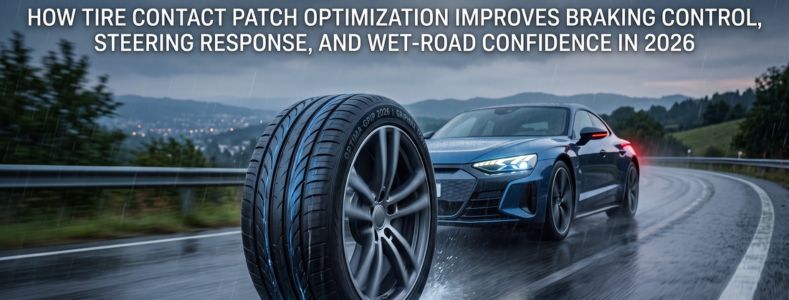
Tire technology has become increasingly sophisticated as manufacturers work to improve vehicle safety, handling, comfort, and efficiency. While tread patterns and rubber compounds receive considerable attention, another important factor is the tire’s contact patch—the area of the tire that directly touches the road.
In 2026, advanced contact patch optimization is helping tire manufacturers create more consistent interaction between tires and road surfaces. By carefully controlling the shape, pressure distribution, tread structure, and flexibility of the contact patch, modern tires can support improved braking control, steering response, and wet-road confidence.
For drivers searching for the best tires for car applications, understanding contact patch design can help them make better purchasing decisions. Similarly, drivers who regularly encounter gravel, dirt, mud, and uneven surfaces should understand how contact patch characteristics influence the performance of modern all terrain tires.
What Is a Tire Contact Patch?
The contact patch is the portion of a tire’s tread that physically touches the road surface while the vehicle is moving.
Although relatively small compared with the overall tire, this area performs several critical functions.
The contact patch helps transfer:
- Braking forces
- Acceleration forces
- Steering forces
- Cornering forces
It also plays an important role in maintaining traction when road conditions change.
Why Contact Patch Optimization Matters
A tire does not necessarily perform better simply because it has a larger contact patch. What matters is how effectively the available contact area distributes pressure and maintains consistent contact with the road.
Modern tire development focuses on factors such as:
- Contact pressure distribution
- Tread stiffness
- Tire construction
- Inflation pressure
- Vehicle load
- Road surface
- Temperature
Optimizing these characteristics can help produce more predictable tire behavior.
Improving Braking Control
During braking, the tires must transfer the vehicle’s stopping forces to the road.
A well-designed contact patch can help distribute braking forces more consistently across the tread.
This may contribute to:
- More predictable braking
- Improved straight-line stability
- Better traction utilization
- More consistent stopping behavior
- Reduced irregular tread loading
Actual braking performance also depends on vehicle weight, brake condition, road surface, tire compound, speed, and weather.
How Contact Patch Design Influences Steering Response
Steering response depends partly on how quickly the tires respond to changes in direction.
During cornering, lateral forces act on the contact patch. If the tread and sidewall are properly engineered, the tire can maintain a more consistent road connection as steering inputs change.
Potential benefits include:
- More precise steering
- Improved directional stability
- Better cornering confidence
- More predictable handling
- Reduced steering delay
These characteristics are particularly important during emergency maneuvers and highway driving.
Contact Patch and Wet-Road Performance
Wet roads create additional challenges because water can reduce the direct interaction between rubber and pavement.
Tire manufacturers therefore design tread patterns and contact areas to help move water away from the tire-road interface.
Features that can support wet performance include:
- Circumferential grooves
- Lateral channels
- Optimized tread blocks
- Specialized rubber compounds
- Carefully distributed contact pressure
A properly optimized contact patch works together with these features to help maintain traction in wet conditions.
Reducing the Risk of Hydroplaning
Hydroplaning occurs when a layer of water prevents sufficient contact between the tire and road.
Tire design cannot eliminate hydroplaning risk completely, but appropriate tread design and adequate tire condition can help manage water evacuation.
Factors that influence hydroplaning resistance include:
- Vehicle speed
- Water depth
- Tire tread depth
- Tire pressure
- Tread pattern
- Road surface
Drivers should always reduce speed in heavy rain and maintain properly inflated tires.
Choosing the Best Tires for Car Applications
Drivers looking for the best tires for car use should evaluate more than brand reputation or price.
Important considerations include:
- Tire size
- Load rating
- Speed rating
- Wet traction
- Tread design
- Ride comfort
- Driving conditions
- Expected mileage
A tire optimized for dry highway driving may have different characteristics from one designed for frequent wet-weather use.
The ideal choice should match the vehicle and driving environment.
Contact Patch Optimization in All Terrain Tires
Modern all terrain tires must perform across a much wider range of surfaces than conventional highway tires.
They may encounter:
- Asphalt
- Gravel
- Dirt
- Sand
- Mud
- Rocky surfaces
Manufacturers therefore need to balance road handling with off-road traction.
Contact patch design can help determine how effectively an all-terrain tire interacts with changing surfaces.
Balancing On-Road and Off-Road Performance
All-terrain tires often use reinforced construction and more aggressive tread patterns than standard passenger tires.
However, overly aggressive designs can affect:
- Road noise
- Ride comfort
- Rolling resistance
- Highway handling
Modern tire engineering attempts to find a balance that provides useful off-road capability without sacrificing everyday road performance.
Importance of Tire Pressure
Contact patch behavior is strongly influenced by tire inflation pressure.
Underinflation can increase the size of the contact area and cause excessive sidewall flex. Overinflation can reduce the effective contact area and change how pressure is distributed across the tread.
Incorrect pressure can contribute to:
- Uneven tread wear
- Reduced handling
- Lower fuel efficiency
- Increased heat generation
- Poor ride quality
Drivers should follow the vehicle manufacturer’s recommended tire pressure.
Impact of Vehicle Load
The vehicle’s weight also influences contact patch pressure. When a vehicle carries additional passengers or cargo, the tires experience greater loads.
Correctly rated tires and appropriate inflation pressure are essential for maintaining safe performance under changing load conditions.
Drivers should never exceed the tire’s specified load capacity.
Contact Patch and Tire Wear
Uneven contact pressure can contribute to irregular tread wear.
Potential wear patterns may indicate issues involving:
- Incorrect tire pressure
- Wheel alignment
- Suspension components
- Tire balance
- Excessive loading
Regular tire inspections and rotations can help identify developing problems before they become more serious.
Future of Contact Patch Technology
Tire development is increasingly incorporating advanced simulation and data analysis.
Future technologies may include:
- AI-assisted tire design
- Real-time contact monitoring
- Smart tire sensors
- Pressure distribution analysis
- Predictive wear monitoring
- Advanced tread materials
Connected tire systems could eventually provide vehicle computers with more detailed information about tire-road interaction.
Final Thoughts
Tire contact patch optimization is becoming an important part of modern tire engineering in 2026. By improving how pressure and forces are distributed across the tread, manufacturers can develop tires that provide more predictable braking, responsive steering, and improved wet-road confidence.
Drivers searching for the best tires for car applications should consider contact patch behavior alongside tire size, compound, tread design, load rating, and weather performance. Drivers who frequently move between paved roads and challenging surfaces can also evaluate modern all terrain tires based on their balance of road comfort, wet traction, durability, and off-road capability.
Ultimately, proper tire selection and maintenance remain essential. Maintaining correct inflation pressure, checking tread condition, performing regular rotations, and following the vehicle manufacturer’s specifications can help drivers get the most reliable performance from modern tire technology.
Frequently Asked Questions
What is a tire contact patch?
The contact patch is the portion of a tire’s tread that directly touches the road surface. It transfers braking, acceleration, steering, and cornering forces between the vehicle and pavement.
Can contact patch optimization improve braking?
Optimized contact pressure and tread design can help tires use available traction more consistently, potentially supporting predictable braking performance.
How does contact patch design affect wet-road confidence?
The contact patch works with tread grooves, channels, rubber compounds, and tire construction to help maintain contact with wet pavement and evacuate water.
What should I consider when choosing the best tires for car use?
When selecting the best tires for car applications, consider the correct size, load rating, speed rating, wet traction, tread design, driving environment, comfort, and expected mileage.
Are all terrain tires suitable for everyday driving?
Many modern all terrain tires are designed to provide a balance between on-road and off-road performance. However, the ideal tire depends on how frequently and where the vehicle is driven.
Does tire pressure affect the contact patch?
Yes. Tire pressure affects contact area, pressure distribution, sidewall flex, handling, tread wear, and heat generation. Always follow the vehicle manufacturer’s recommended inflation pressure.