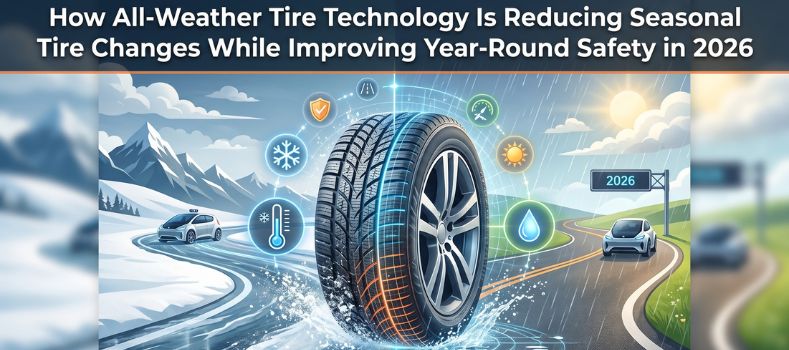
Advancements in tire engineering have made modern all-weather tires more capable than ever before. Designed to provide dependable traction in both warm and cold conditions, today’s tires reduce the need for seasonal tire changes while maintaining excellent safety and performance. In 2026, many drivers are choosing premium all season tires and versatile all terrain tires to simplify vehicle maintenance and enjoy reliable driving throughout the year.
Table of Contents
- What are all-weather tires?
- How tire technology has evolved
- Benefits of year-round tire performance
- All-weather vs. all-season tires
- When all-terrain tires are the better choice
- Tire maintenance tips
- FAQs
What Are All-Weather Tires?
All-weather tires are designed to perform in a wide range of driving conditions.
Unlike traditional summer or winter tires, they combine advanced tread compounds with specialized tread patterns to maintain grip across changing temperatures.
They are engineered to handle:
- Dry roads
- Wet pavement
- Light snow
- Cold temperatures
- Mild winter conditions
This versatility makes them an attractive option for drivers who want dependable performance without changing tires every season.
Tire Technology Has Improved Significantly
Modern tire manufacturers continue developing innovative rubber compounds and tread designs.
Today’s all-weather tires feature:
- Advanced silica-based rubber compounds
- Improved water evacuation channels
- Enhanced tread flexibility
- Stronger internal construction
- Optimized contact patches
These improvements increase grip while extending overall tire life.
Better Year-Round Safety
Weather conditions often change unexpectedly.
Modern tire technology helps improve safety by providing:
- Better wet braking
- Improved cornering stability
- Reliable cold-weather traction
- Reduced hydroplaning
- Consistent handling
Drivers experience greater confidence regardless of changing road conditions.
Why Many Drivers Choose All Season Tires
High-quality all season tires remain one of the most popular choices for everyday driving.
They offer an excellent balance between:
- Comfort
- Fuel efficiency
- Road noise reduction
- Dry traction
- Wet performance
- Long tread life
For drivers living in regions with moderate weather, all season tires often provide sufficient performance throughout the year.
When All Terrain Tires Make More Sense
Drivers who frequently leave paved roads may benefit from all terrain tires.
These tires feature:
- Aggressive tread blocks
- Stronger sidewalls
- Improved off-road traction
- Better durability
- Enhanced grip on gravel and dirt
Modern all terrain tires have also become quieter and more comfortable for daily highway driving than earlier generations.
Fewer Seasonal Tire Changes
One of the biggest advantages of modern all-weather technology is convenience.
Drivers can reduce:
- Tire storage needs
- Seasonal installation costs
- Service appointments
- Wheel balancing expenses
Using one high-quality set of tires year-round simplifies vehicle maintenance.
Improved Fuel Efficiency
New tire compounds help reduce rolling resistance.
Lower rolling resistance contributes to:
- Better fuel economy
- Reduced engine workload
- Lower emissions
- Longer driving range
Many premium all-weather designs balance traction with efficiency.
Better Performance in Wet Conditions
Heavy rain remains one of the biggest driving hazards.
Modern tread designs include:
- Wide circumferential grooves
- Multiple water channels
- Optimized siping
- Enhanced drainage patterns
These features help move water away from the tire’s contact patch, reducing the likelihood of hydroplaning.
Longer Tire Life
Manufacturers continue improving tread durability through advanced construction techniques.
Benefits include:
- More even tread wear
- Greater resistance to heat
- Improved structural integrity
- Extended service life
Proper tire maintenance further increases longevity.
Choosing the Right Tire
Before purchasing replacement tires, consider:
- Local climate
- Driving habits
- Highway vs. off-road use
- Annual mileage
- Vehicle type
- Manufacturer recommendations
Selecting the appropriate tire ensures the best balance of safety, comfort, and performance.
Tire Maintenance Still Matters
Even the most advanced tire technology requires regular maintenance.
Recommended practices include:
- Checking tire pressure monthly.
- Rotating tires regularly.
- Inspecting tread depth.
- Maintaining proper wheel alignment.
- Balancing wheels when needed.
- Replacing damaged tires promptly.
Routine maintenance helps preserve safety and maximize tire lifespan.
Future of Tire Technology
Tire manufacturers continue investing in innovation.
Future developments are expected to include:
- AI-assisted tire monitoring
- Smart tire pressure sensors
- Self-sealing technology
- Sustainable rubber compounds
- Adaptive tread designs
These advancements will further improve safety, efficiency, and durability.
Final Thoughts
Modern all-weather tire technology is changing how drivers approach year-round vehicle maintenance. Improved rubber compounds, advanced tread patterns, and stronger construction allow today’s tires to perform reliably across a wide range of road and weather conditions while reducing the need for seasonal tire changes.
For everyday commuting, premium all season tires provide an excellent balance of comfort, fuel efficiency, and dependable traction. Drivers who regularly encounter gravel roads, trails, or challenging terrain can benefit from the added durability and versatility of all terrain tires. By selecting the right tire for your driving needs and following proper maintenance practices, you can enjoy safer, more confident driving throughout every season in 2026.
FAQs
What are all-weather tires?
All-weather tires are designed to provide dependable performance in dry, wet, and light winter conditions, allowing many drivers to use one set of tires throughout the year.
Are all season tires good for everyday driving?
Yes. High-quality all season tires offer reliable traction, long tread life, good fuel efficiency, and comfortable driving characteristics for most everyday road conditions.
When should I choose all terrain tires?
All terrain tires are ideal for drivers who frequently travel on gravel roads, dirt trails, construction sites, or other off-road environments while still requiring dependable highway performance.
Can all-weather tires eliminate seasonal tire changes?
In many regions with moderate climates, modern all-weather tires significantly reduce or eliminate the need to switch between summer and winter tires.
How can I maximize tire lifespan?
Regular tire pressure checks, routine rotations, proper wheel alignment, balancing, and timely inspections help extend tire life while maintaining safe driving performance.