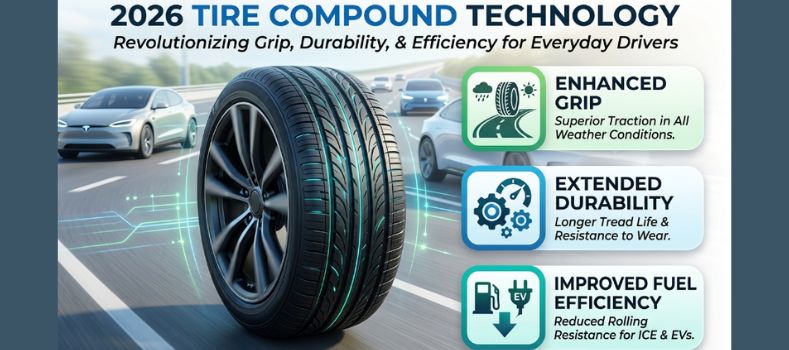
Modern tire compound technology has advanced significantly, allowing manufacturers to produce tires that deliver better road grip, longer tread life, lower rolling resistance, and improved fuel efficiency. By combining innovative rubber formulations with advanced materials and computer-assisted engineering, today’s tires help everyday drivers enjoy safer handling, lower operating costs, and enhanced driving comfort across a wide range of road conditions.
Table of Contents
- What is tire compound technology?
- How modern tire compounds improve performance
- Better grip for safer driving
- Increased durability and tire life
- Improved fuel efficiency through lower rolling resistance
- Choosing the right tire compound
- Future trends in tire technology
- FAQs
Understanding Tire Compound Technology
A tire compound is the specialized blend of rubber, polymers, silica, carbon black, oils, and other additives used to manufacture a tire.
The exact formulation determines how the tire performs in areas such as:
- Road grip
- Heat resistance
- Wear resistance
- Fuel efficiency
- Wet-weather traction
- Ride comfort
Manufacturers continuously refine these compounds to balance performance, safety, and durability for different driving conditions.
Why Tire Compounds Matter More Than Ever
Modern vehicles are heavier and more technologically advanced than previous generations. Electric vehicles, hybrids, SUVs, and high-performance sedans place greater demands on tires than ever before.
Drivers expect tires to provide:
- Strong traction
- Long service life
- Quiet operation
- Lower fuel consumption
- Reliable performance in varying weather conditions
Advanced tire compounds help meet these expectations without compromising safety.
Improved Grip Enhances Safety
One of the most important functions of a tire compound is maintaining traction with the road surface.
Modern rubber formulations remain flexible across a wider range of temperatures, allowing tires to maintain better contact with the road.
Benefits include:
- Shorter braking distances
- Improved cornering stability
- Better acceleration
- Increased control during emergency maneuvers
- Greater confidence on wet roads
Enhanced grip contributes directly to overall vehicle safety.
Better Wet Weather Performance
Rain significantly reduces available road traction.
Today’s silica-rich tire compounds improve water evacuation and increase grip on wet pavement.
Drivers experience:
- Reduced hydroplaning risk
- Better steering response
- Improved braking performance
- Greater stability during heavy rainfall
These improvements help drivers maintain better control in challenging weather.
Longer Tire Life Through Advanced Materials
Earlier tire compounds often required drivers to choose between excellent grip or long tread life.
Modern material science has reduced this compromise.
Advanced compounds now resist:
- Abrasion
- Heat buildup
- Surface cracking
- Uneven tread wear
As a result, many modern tires deliver longer service life while maintaining excellent performance.
Lower Rolling Resistance Improves Fuel Economy
Rolling resistance refers to the energy required for a tire to roll across the road. Higher rolling resistance forces the engine to work harder, increasing fuel consumption.
New-generation tire compounds reduce internal friction within the tire, allowing it to roll more efficiently.
Benefits include:
- Better fuel economy
- Lower carbon emissions
- Reduced engine workload
- Improved overall efficiency
Even small reductions in rolling resistance can lead to noticeable fuel savings over thousands of miles.
Supporting Electric and Hybrid Vehicles
Electric vehicles have introduced new challenges for tire manufacturers.
EVs generate instant torque while carrying heavier battery packs, increasing tire wear.
Modern compounds help address these challenges by providing:
- Higher durability
- Lower rolling resistance
- Reduced road noise
- Improved energy efficiency
These characteristics help maximize electric driving range while maintaining safety.
Enhanced Driving Comfort
Tire compounds also influence ride quality.
Improved rubber formulations absorb road imperfections more effectively, reducing:
- Road vibration
- Cabin noise
- Harsh impacts
- Driver fatigue
A quieter and smoother ride enhances comfort during both daily commuting and long-distance travel.
Choosing the Right Tire Compound
Different driving styles require different tire characteristics. When selecting tires, drivers should consider:
- Local climate
- Typical road conditions
- Annual mileage
- Vehicle type
- Driving habits
For example:
- Performance compounds prioritize grip.
- Touring compounds emphasize comfort and durability.
- Eco-focused compounds maximize fuel efficiency.
Choosing the right tire ensures the best balance of performance and longevity.
Importance of Proper Tire Maintenance
Even the most advanced tire compound cannot perform at its best without regular maintenance.
Drivers should:
- Check tire pressure monthly.
- Rotate tires regularly.
- Inspect tread depth.
- Maintain proper wheel alignment.
- Balance tires as recommended.
Proper maintenance helps preserve both safety and fuel efficiency.
Future Innovations in Tire Technology
Research continues to push tire technology forward.
Emerging innovations include:
- Sustainable rubber materials
- AI-assisted tire monitoring
- Self-healing compounds
- Smart tire sensors
- Recycled raw materials
- Adaptive tread technologies
These advancements aim to improve both environmental sustainability and driving performance.
Why Quality Tires Are a Smart Investment
Although premium tires may have a higher purchase price, they often provide better long-term value through:
- Longer tread life
- Lower fuel costs
- Improved handling
- Better braking performance
- Increased driving confidence
High-quality tires contribute to lower overall vehicle operating costs while enhancing safety.
Final Thoughts
Tire compound technology has become one of the most important factors influencing modern vehicle performance. Advances in rubber chemistry and material engineering have enabled manufacturers to produce tires that offer stronger grip, improved durability, quieter operation, and greater fuel efficiency than ever before.
For everyday drivers in 2026, these innovations translate into safer journeys, lower fuel expenses, and longer-lasting tires that perform reliably in a wide range of driving conditions. By selecting high-quality tires and maintaining them properly, motorists can maximize the benefits of modern tire compound technology while enjoying a more comfortable and efficient driving experience.
FAQs
What is a tire compound?
A tire compound is the specially engineered mixture of rubber, silica, polymers, carbon black, and other materials that determines a tire’s grip, durability, fuel efficiency, and overall performance.
How do modern tire compounds improve fuel economy?
Advanced compounds reduce rolling resistance, allowing tires to roll more efficiently and helping the vehicle consume less fuel.
Why is silica used in modern tires?
Silica improves wet-weather traction, reduces rolling resistance, and enhances tread durability without sacrificing grip.
Do better tire compounds last longer?
Yes. Modern compounds are designed to resist wear, heat buildup, and cracking, helping extend tire life while maintaining consistent performance.
How can I maximize tire performance?
Maintain proper tire pressure, rotate tires regularly, inspect tread wear, keep wheels aligned, and choose tires that match your driving conditions and vehicle type.