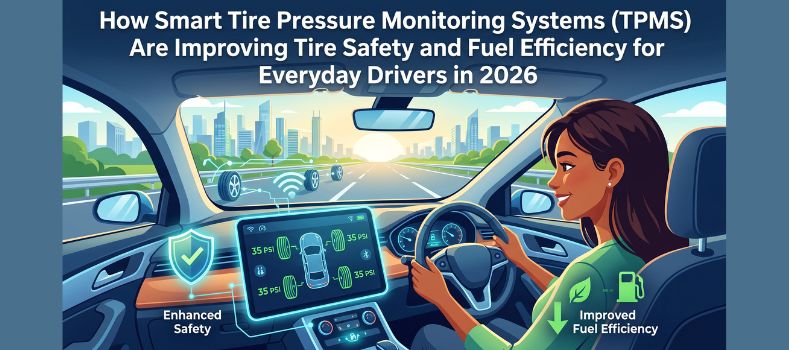
Smart Tire Pressure Monitoring Systems (TPMS) continuously monitor tire pressure and alert drivers when inflation levels fall outside the recommended range. Maintaining proper tire pressure improves vehicle safety, extends tire life, enhances handling, and increases fuel efficiency. Pairing a reliable TPMS with high-quality Tires for Sale, including popular sizes like 235/45R18 tires, helps drivers achieve safer and more economical driving in 2026.
Table of Contents
- What is a TPMS?
- How smart TPMS works
- Benefits of maintaining correct tire pressure
- Fuel efficiency improvements
- Extending tire lifespan
- Choosing the right replacement tires
- FAQs
What Is a Tire Pressure Monitoring System?
A Tire Pressure Monitoring System is an electronic safety feature that continuously checks the air pressure inside each tire.
If pressure drops below the manufacturer’s recommended level, the system immediately warns the driver through the dashboard.
Modern TPMS technology helps prevent unsafe driving conditions before they become serious problems.
How Smart TPMS Works
Today’s TPMS systems use sensors installed inside each wheel to measure tire pressure in real time.
The sensors transmit information to the vehicle’s onboard computer, which monitors:
- Tire pressure
- Temperature changes
- Pressure loss
- Warning thresholds
Some advanced systems also display the exact pressure for each individual tire, allowing drivers to identify issues quickly.
Why Proper Tire Pressure Matters
Correct tire pressure affects nearly every aspect of vehicle performance.
Properly inflated tires provide:
- Better road grip
- Improved braking performance
- Enhanced steering response
- Even tread wear
- Greater driving comfort
Driving with underinflated or overinflated tires increases the risk of uneven wear and reduces overall vehicle stability.
Improving Fuel Efficiency
One of the biggest advantages of TPMS is improved fuel economy. Underinflated tires create higher rolling resistance, forcing the engine to work harder.
Maintaining proper inflation helps:
- Reduce rolling resistance
- Lower fuel consumption
- Improve engine efficiency
- Reduce carbon emissions
Even a small improvement in tire pressure can produce noticeable fuel savings over time.
Increasing Tire Lifespan
Uneven tire wear is often caused by incorrect tire pressure.
Maintaining proper inflation helps ensure:
- Even tread wear
- Longer tire life
- Reduced replacement frequency
- Better overall performance
Drivers save money by maximizing the usable life of every tire.
Enhanced Road Safety
Correct tire pressure directly contributes to safer driving.
Properly inflated tires improve:
- Emergency braking
- Cornering stability
- Wet-road traction
- High-speed control
- Load-carrying capability
TPMS alerts drivers before low tire pressure creates dangerous driving conditions.
Early Detection of Slow Leaks
Small punctures and valve leaks may not be immediately noticeable. Smart TPMS identifies gradual pressure loss early, allowing drivers to:
- Repair tires before major damage occurs
- Avoid roadside breakdowns
- Prevent blowouts
- Reduce repair costs
Early detection improves both safety and convenience.
Choosing High-Quality Replacement Tires
When replacement becomes necessary, selecting premium Tires for Sale is just as important as maintaining proper tire pressure.
Quality tires provide:
- Better durability
- Improved traction
- Lower road noise
- Enhanced fuel efficiency
- Reliable wet and dry performance
Purchasing from reputable suppliers helps ensure product quality and proper fitment.
Why Tire Size Matters
Every vehicle requires tire sizes recommended by its manufacturer.
For many modern sedans and performance vehicles, 235/45R18 tires offer an excellent balance of:
- Ride comfort
- Handling precision
- Stability
- Fuel efficiency
- Cornering performance
Choosing the correct tire size allows the TPMS and other safety systems to operate as intended.
Maintaining Your TPMS
Like any automotive system, TPMS requires occasional attention. Recommended maintenance includes:
- Checking tire pressure monthly
- Replacing damaged sensors
- Resetting TPMS after tire replacement
- Calibrating the system when required
- Inspecting valve stems during tire service
Regular maintenance ensures accurate pressure readings.
Future of Tire Monitoring Technology
TPMS technology continues evolving rapidly.
Future systems are expected to include:
- AI-powered predictive tire maintenance
- Real-time mobile app monitoring
- Advanced temperature analysis
- Cloud-connected diagnostics
- Predictive tread wear monitoring
These innovations will further improve vehicle safety and maintenance planning.
Final Thoughts
Smart Tire Pressure Monitoring Systems have become an essential safety feature for modern vehicles. By continuously monitoring tire pressure, TPMS helps improve handling, reduce tire wear, increase fuel efficiency, and minimize the risk of tire-related accidents.
Combining TPMS with high-quality Tires for Sale ensures drivers enjoy dependable performance and long-lasting durability. Selecting the correct size, such as 235/45R18 tires, further supports optimal handling, braking, and overall vehicle efficiency. As automotive safety technologies continue advancing throughout 2026, TPMS remains one of the simplest yet most effective tools for protecting both drivers and their vehicles.
FAQs
What does a TPMS do?
A Tire Pressure Monitoring System continuously monitors tire pressure and alerts drivers when one or more tires fall below the recommended inflation level.
Can proper tire pressure improve fuel economy?
Yes. Properly inflated tires reduce rolling resistance, allowing the engine to operate more efficiently and improving fuel economy.
Why should I buy quality Tires for Sale?
Choosing premium Tires for Sale provides better traction, longer tread life, improved safety, and greater overall driving performance.
Are 235/45R18 tires suitable for all vehicles?
No. 235/45R18 tires are designed for specific vehicles. Always follow your manufacturer’s recommended tire size for proper fitment and safe operation.
How often should tire pressure be checked?
Even with TPMS, drivers should manually check tire pressure at least once a month and before long trips to ensure optimal performance and safety.