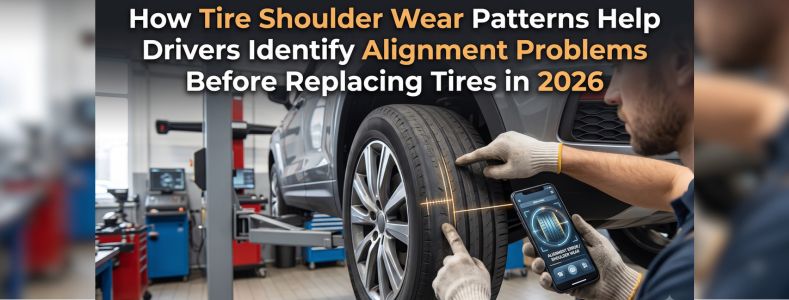
Tire condition plays an important role in vehicle safety, handling, and driving comfort. However, when a tire develops uneven wear along its outer or inner edges, the problem may involve more than normal tread deterioration. Understanding tire shoulder wear patterns can help drivers identify potential wheel alignment issues before purchasing replacements. Whether comparing 235/45R18 tires for a compatible vehicle or considering Goodyear tires for everyday driving, inspecting tread wear and correcting underlying problems can help improve tire life and maintain reliable road performance in 2026.
What Is Tire Shoulder Wear?
The tire shoulder is the area where the main tread meets the sidewall. It helps support cornering forces and contributes to the tire’s contact with the road. Shoulder wear occurs when the tread near one or both edges wears more quickly than the central portion. Some wear develops gradually through normal use, but pronounced or uneven shoulder wear may indicate incorrect inflation, alignment problems, suspension issues, or driving conditions that place additional stress on the tire.
Drivers should inspect all four tires regularly because wear patterns can differ between front and rear wheels. Identifying changes early may help prevent unnecessary replacement costs and reveal problems that need professional attention.
How Wheel Alignment Affects Tire Shoulder Wear
Wheel alignment refers to the adjustment of wheel angles according to the vehicle manufacturer’s specifications. The main alignment measurements include camber, toe, and caster, although not every adjustment applies to every vehicle. Incorrect alignment can change how the tire meets the road, creating uneven tread wear over time.
- Incorrect toe: Wheels that point slightly inward or outward beyond specification may cause feathered tread wear and accelerated wear across the tread.
- Incorrect camber: Excessive positive or negative camber can increase wear on one shoulder, depending on the vehicle’s suspension geometry and operating conditions.
- Suspension damage: Worn bushings, damaged control arms, or other faulty components may prevent the wheels from maintaining correct alignment.
If a tire’s inner or outer shoulder is wearing significantly faster than the rest of the tread, a qualified technician should inspect alignment and suspension components before new tires are installed.
Inner Shoulder Wear vs. Outer Shoulder Wear
Recognizing where the wear occurs can help drivers explain the problem to a technician.
- Inner Shoulder Wear: Excessive wear on the inside edge may be associated with alignment settings such as excessive negative camber or incorrect toe. However, the pattern alone cannot confirm the cause. Suspension wear and vehicle-specific geometry may also contribute.
- Outer Shoulder Wear: Wear concentrated on the outside edge may result from excessive positive camber, incorrect toe, frequent hard cornering, or other operating conditions. It can also occur when tires are consistently underinflated, especially when both shoulders show increased wear.
- Wear on Both Shoulders: When both shoulders wear faster than the center, underinflation is one possible explanation. Drivers should check tire pressure against the vehicle placard or owner’s manual rather than relying on the maximum pressure printed on the tire sidewall.
These patterns are useful clues, but a professional inspection is the best way to establish the actual cause.
Why Tire Pressure and Suspension Condition Matter
Alignment is not the only factor that influences shoulder wear. Incorrect inflation changes the tire’s contact with the road and can accelerate tread deterioration. Underinflated tires often develop increased wear on both shoulders, while overinflation may contribute to greater wear in the center of the tread. These are general patterns rather than definitive diagnoses.
Suspension and steering components also affect tire positioning. Worn ball joints, damaged bushings, weak springs, or other mechanical faults can cause alignment to change or prevent it from remaining stable. Before replacing badly worn tires, drivers should ask a qualified technician to check tire pressure, alignment angles, wheel balance, and suspension condition as appropriate.
Choosing the Right Replacement Tires
When tread wear makes replacement necessary, selecting the correct tire size is essential. 235/45R18 tires specify a nominal section width of 235 millimeters, an aspect ratio of 45%, and an 18-inch wheel diameter.
However, this size is suitable only for vehicles whose manufacturer approves it. Drivers should verify the recommended tire size, load index, speed rating, and other fitment requirements in the owner’s manual or vehicle placard.
Drivers considering Goodyear tires should compare available models based on their vehicle requirements, typical weather, road conditions, tread-life expectations, and handling preferences. Tire brand alone does not determine whether a product is suitable for a particular vehicle.
Correct fitment and proper installation are important for safe handling and reliable performance.
How to Prevent Uneven Tire Shoulder Wear
Regular maintenance can help drivers identify developing problems before they cause significant tread loss.
- Check tire pressure monthly: Measure pressure when tires are cold and follow the vehicle manufacturer’s recommendations.
- Inspect tread regularly: Look for uneven wear, exposed cords, cuts, bulges, or other signs of damage.
- Check alignment when needed: Arrange an inspection after hitting a significant pothole, experiencing steering changes, or noticing uneven wear.
- Maintain suspension components: Repair worn or damaged parts that affect wheel positioning.
- Rotate tires as recommended: Follow the vehicle manufacturer’s rotation schedule and directional or staggered-fitment requirements.
- Replace unsafe tires promptly: Tires with exposed cords, serious structural damage, or tread below the applicable legal minimum should not remain in service.
These practices can help extend usable tire life while supporting predictable handling and braking.
Final Thoughts
Tire shoulder wear can provide valuable clues about alignment, inflation, and suspension problems. Inspecting the inner and outer tread edges helps drivers recognize potential issues before installing replacement tires.
Whether shopping for 235/45R18 tires or comparing Goodyear tires, drivers should address the cause of uneven wear rather than simply replacing the damaged tires. Combining correct tire fitment with regular pressure checks and professional alignment inspections can help maintain safer driving and better tire performance in 2026.
Frequently Asked Questions
What causes tire shoulder wear?
Possible causes include incorrect inflation, wheel misalignment, worn suspension components, and driving conditions that place additional stress on the tread.
Does inner shoulder wear always mean bad alignment?
No. Alignment is one possible cause, but suspension damage, vehicle geometry, and other factors may also contribute. A professional inspection is recommended.
Are 235/45R18 tires suitable for every vehicle with 18-inch wheels?
No. Drivers must confirm the approved tire size, load index, speed rating, and other specifications for their particular vehicle.
How often should I check tire pressure?
Check it at least monthly and before longer journeys. Measure when the tires are cold and follow the vehicle manufacturer’s recommended pressure.
Should I replace tires before correcting alignment?
If replacement is necessary, the underlying alignment or suspension problem should be corrected before or during installation. Otherwise, the replacement tires may develop uneven wear again.