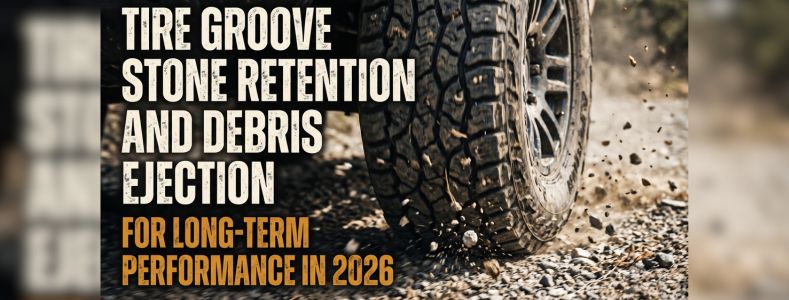
Driving across gravel roads, rocky trails, and uneven terrain exposes tires to small stones, dirt, and other debris that can become lodged in tread grooves. Although this may seem like a minor issue, regular tread inspection helps drivers identify potential damage before it affects tire performance. For vehicles used in demanding conditions, understanding stone retention and debris ejection is especially important when choosing off road tires or all terrain tires. These tire types are designed for different combinations of traction, durability, and road comfort, making proper maintenance essential for long-term performance.
What Is Tire Groove Stone Retention?
Tire groove stone retention occurs when small rocks or gravel become trapped in the channels between tread blocks. The likelihood of retention depends on several factors, including groove width, tread depth, block arrangement, stone size, and the type of surface being driven on.
Some tires feature tread patterns designed to reduce stone retention or help debris escape as the tire rotates. However, no tread design can prevent every stone from becoming lodged, particularly when driving through loose gravel or rocky terrain.
Small stones may remain harmlessly lodged in some grooves, but larger or sharply shaped debris can sometimes damage the tread or become a concern if it penetrates deeper into the rubber. Drivers should therefore inspect their tires regularly instead of assuming that every trapped stone requires immediate professional attention.
How Debris Affects Tread Inspection
Tread inspection helps drivers distinguish ordinary debris accumulation from signs of potential tire damage. Stones can hide cuts, punctures, uneven wear, and other surface irregularities, making it harder to assess the tire’s actual condition.
During inspection, drivers should look for:
- Stones or other objects lodged deeply in the tread grooves.
- Cuts, cracks, bulges, or exposed internal materials.
- Uneven tread wear across the tire’s width.
- Objects that appear to have penetrated the rubber.
- Damage around the shoulders and sidewalls.
Remove only loose debris that can be taken out safely without damaging the tire. Do not use sharp tools to dig into the tread, and never pull out an embedded nail or screw yourself. A penetrating object may be limiting air loss, and removing it could cause rapid deflation. Have suspected punctures inspected by a qualified tire professional.
Why Off Road Tires Need Regular Debris Checks
Off road tires are designed for demanding driving environments such as mud, loose gravel, sand, and rocky trails. Depending on their design, they may feature deeper grooves, larger tread blocks, and open channels intended to provide traction on uneven surfaces.
These features can improve grip in suitable conditions, but they can also collect stones and debris. Frequent driving over sharp rocks increases the importance of inspecting the tread after challenging trips.
Drivers should check tire pressure before and after demanding off-road use when appropriate, examine the tread for cuts, and look for damage around the shoulders and sidewalls. Tire pressure should always follow the vehicle and tire manufacturer’s recommendations for the driving conditions. Any pressure adjustment for off-road use should be made only when appropriate for the vehicle, load, terrain, and tire specifications.
How All Terrain Tires Balance Road and Trail Performance
All terrain tires are designed to provide a balance between everyday road driving and occasional off-road travel. Their tread patterns generally combine traction-oriented grooves with features intended to maintain reasonable handling and comfort on paved surfaces.
Stone retention can still occur, especially when these tires are frequently used on gravel or rough tracks. The amount of debris retained depends on the particular tread design and operating conditions rather than the tire category alone.
For drivers who regularly switch between highways and unpaved roads, routine inspections help identify developing problems before they lead to unexpected downtime. Checking for irregular wear, embedded objects, and visible damage is particularly useful after extended gravel driving.
When comparing tires, examine the manufacturer’s specifications, intended terrain, tread design, load rating, and road-use requirements rather than relying solely on appearance.
How Stone Ejection Features Support Tire Maintenance
Some tire designs incorporate groove shapes, varying tread-block arrangements, or other features intended to reduce stone trapping and encourage debris release during rotation. Their effectiveness varies by tire model and the type of material encountered.
A tread pattern that releases loose stones more easily may make routine cleaning and inspection simpler. Nevertheless, debris ejection features should not be treated as a guarantee against punctures or tread damage.
Drivers should also understand that tire performance depends on more than groove design. Correct inflation, wheel alignment, load management, driving habits, and timely rotation all contribute to wear patterns and service life.
Maintenance Practices for Long-Term Tire Performance
A consistent tire maintenance routine can help drivers identify damage early and get the most appropriate service from their tires.
- Inspect after rough driving: Check tread grooves and sidewalls after trips involving gravel, rocks, or construction debris.
- Check tire pressure: Use a reliable gauge and follow the vehicle manufacturer’s recommended pressure for the current load and conditions.
- Monitor tread wear: Look for uneven wear, damaged blocks, and tread depth approaching the applicable legal or manufacturer limit.
- Keep tires clean: Remove loose stones carefully, avoiding sharp tools and unnecessary force.
- Arrange professional inspections: Seek qualified help for suspected punctures, embedded objects, cuts, bulges, or unexplained pressure loss.
- Maintain the full wheel assembly: Follow recommendations for tire rotation, alignment, balancing, and wheel inspection.
These practices help support predictable handling and reduce the likelihood of overlooking damage that could compromise safety.
Final Thoughts
Tire groove stone retention and debris ejection are useful considerations when evaluating tread condition and maintenance needs. Both off road tires and all terrain tires can collect stones during regular use, especially on gravel and rocky surfaces. Their tread designs may influence how debris is retained or released, but regular inspection remains essential.
By checking for embedded objects, monitoring wear, maintaining correct inflation, and seeking professional help when damage is suspected, drivers can make more informed tire maintenance decisions and support long-term driving safety.
Frequently Asked Questions
Why do stones get stuck in tire tread grooves?
Stones become trapped when their size and shape fit between tread blocks or inside grooves. Road surface, tread depth, and tread design all influence stone retention.
Are off road tires more likely to collect stones?
Some off-road tread designs have deep, open grooves that may collect debris in certain conditions. Actual stone retention varies by model and terrain.
Do all terrain tires release stones automatically?
No. Some tread designs help debris escape, but no tire can guarantee complete stone ejection in every driving condition.
Should I remove every stone from my tires?
Loose stones can often be removed carefully, but avoid sharp tools and do not remove embedded nails, screws, or other penetrating objects. Seek professional inspection for suspected damage.
How often should I inspect my tires?
Check tires regularly as part of routine maintenance and after driving over rough or debris-covered terrain. Inspect immediately if you notice pressure loss, vibration, unusual noise, or visible damage.