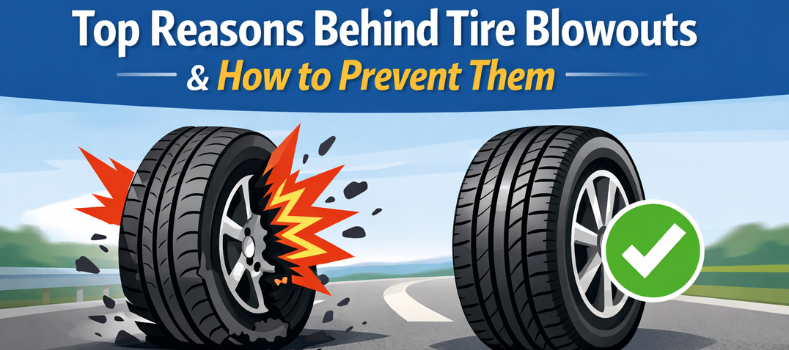
A tire blowout can happen in seconds. One loud bang. A sudden pull of the steering wheel. And your calm highway drive turns into a fight to stay in control. Many US drivers search for the top reasons behind tire blowouts and how to prevent them because they want clear answers. The truth is simple. Most tire blowouts are preventable. They usually happen due to low tire pressure, worn tread, road hazards, or overloading. If you understand why they happen and how to check your tires the right way, you can reduce your risk by a large margin. This guide breaks it down in plain English so you can drive with more confidence and fewer surprises.
What Is a Tire Blowout and Why Does It Happen?
A tire blowout is a sudden loss of air pressure. It often happens when the tire structure weakens and cannot handle heat or pressure anymore.
On US highways, especially in hot states like Texas, Arizona, and Nevada, road temperatures can rise above 140°F in summer. Heat builds inside underinflated tires. That heat weakens the internal belts. When pressure builds too much, the tire can burst.
Blowouts are not random events. They are usually warning signs ignored for too long.
If you’ve ever wondered, “Why did my tire blow out on the highway?” the answer often traces back to maintenance.
The #1 Cause – Underinflated Tires
Low tire pressure is the most common cause of tire failure in the United States.
When a tire does not have enough air:
- The sidewalls flex too much
- Heat builds up quickly
- The internal structure weakens
Over time, this leads to tread separation or a sudden rupture.
Many drivers rely only on the dashboard warning light. That is risky. Tire Pressure Monitoring Systems (TPMS) alert you when pressure drops significantly. By then, damage may already be starting.
How to Prevent Blowouts from Low Tire Pressure
Check tire pressure once a month. Use a digital gauge. Compare it with the PSI listed inside your driver-side door frame.
Do not use the number printed on the tire sidewall. That is the maximum pressure, not the recommended one.
Cold weather in northern states can drop PSI overnight. For every 10°F drop, pressure falls about 1 PSI. This is why winter tire checks matter just as much as summer checks.
Worn-Out or Old Tires
Tires age even if you do not drive much. Rubber dries out. Cracks form. The internal cords weaken.
In many US states, drivers keep tires for six to ten years. That is risky.
How to Check Tire Tread Depth
Use the penny test. Insert a penny into the tread with Lincoln’s head facing down. If you can see the top of his head, the tread is too low.
Low tread means less grip and more heat buildup. Heat leads to blowouts.
Tire Age Matters More Than You Think
Check the DOT code on the tire sidewall. The last four digits show the week and year of manufacture. For example, “3021” means week 30 of 2021.
Experts suggest replacing tires every six years, even if tread looks fine.
At GearShiftTires.com, drivers often learn that preventive replacement costs far less than emergency roadside towing after a blowout.
Overloading Your Vehicle
Every vehicle has a weight limit. This includes passengers, cargo, and towing load.
When you exceed that limit, tires carry more weight than designed. Pressure and heat increase fast. Long road trips during summer vacations make this worse.
Think about SUVs packed for a family trip across California or Florida. Extra luggage adds stress to tires already heated by long highway miles.
How to Avoid Overload-Related Tire Failure
Check your vehicle’s Gross Vehicle Weight Rating (GVWR). It is listed inside the door frame.
Distribute cargo evenly. Avoid putting all heavy items in one area.
This simple step can reduce tire stress and improve fuel economy at the same time.
Road Hazards and Potholes
US roads vary in quality. Winter freeze-thaw cycles in states like Michigan or Illinois create deep potholes. Construction zones leave debris.
Hitting a pothole at high speed can damage the inner tire structure. You may not see damage right away. Days later, that weakened spot can fail.
Sharp objects like nails or metal fragments can also cause slow leaks. Slow leaks lead to underinflation, which leads to blowouts.
Smart Driving to Protect Your Tires
- Slow down on rough roads.
- Avoid sudden curb impacts.
- Inspect tires after hitting a large pothole.
If your steering feels off after impact, get an alignment check.
Extreme Heat – A Silent Tire Killer
Heat is one of the biggest factors in highway tire blowouts.
In southern states, summer heat raises asphalt temperature to dangerous levels. Combine that with high speeds and low tire pressure, and risk increases sharply.
Tires are built to handle heat. But they have limits.
Long-distance truck drivers know this well. That is why commercial vehicles check tires before every route.
Why Highway Speeds Increase Risk
At 75 mph, tires rotate about 1,000 times per mile. That constant motion creates friction. Friction creates heat. Heat weakens rubber.
Reducing speed by even 5–10 mph during extreme heat lowers internal tire stress.
Poor Tire Maintenance Habits
Skipping rotation or alignment shortens tire life.
When tires wear unevenly, weak spots form. These spots are more likely to fail under stress.
Regular tire rotation every 5,000 to 7,500 miles helps tires wear evenly. Alignment ensures proper road contact.
This is not just about comfort. It is about safety.
What To Do If a Tire Blows Out on the Highway
Many drivers panic. Panic makes things worse.
If a front tire blows:
- Grip the steering wheel firmly.
- Do not slam the brakes.
- Let the car slow down gradually.
- Steer straight and move to the shoulder safely.
If a rear tire blows, the vehicle may sway. Stay calm. Ease off the gas slowly.
Practicing this mentally can help you respond better in real life.
Expert Insight – The Future of Tire Safety in the US
Tire technology is improving. Smart tires with built-in sensors are becoming more common. These systems track temperature and pressure in real time.
Over the next few years, more vehicles in the US will integrate advanced monitoring that sends alerts directly to smartphone apps.
Still, technology cannot replace routine checks.
The safest drivers combine smart tools with simple habits.
Simple Blowout Prevention Checklist
- Check tire pressure monthly
- Inspect tread depth regularly
- Replace tires older than six years
- Rotate tires as recommended
- Avoid overloading
- Slow down in extreme heat
Small actions today prevent big problems tomorrow.
Why Prevention Saves More Than Money
A tire blowout is not just an inconvenience. It can lead to serious accidents, especially at highway speeds.
Preventive tire care improves:
- Vehicle control
- Fuel efficiency
- Brake performance
- Road safety for your family
When drivers understand the top reasons behind tire blowouts and how to prevent them, they drive with more awareness.
Conclusion: Safer Roads Start With Simple Tire Care
Tire blowouts rarely happen without warning. Low pressure, worn tread, heat, overload, and road damage are the main causes. Each one is preventable with simple checks and smart driving habits.
You do not need advanced mechanical skills. You only need consistency.
Take five minutes this week to check your tires. Look at the tread. Check the PSI. Review the tire age.
Small steps protect your vehicle, your passengers, and everyone else on the road.
If you want reliable guidance and trusted tire solutions, explore GearShiftTires.com for expert-backed support that helps you drive safer every mile.
Safe driving starts from the ground up.